It Happened
in History!
(Go to
It Happened in History Archives)
|
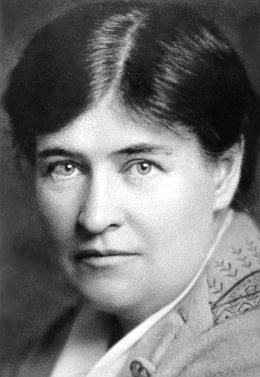
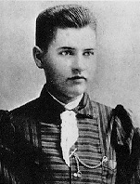
All of the children of that house slept together in the attic, which made for some creative bed-time storytelling sessions. In time, Cather crafted a makeshift study for herself in an alcove on the stairs so that she had a place where she could read and write. Red Cloud became the setting and inspiration for many of Cather's novels, and she drew heavily for her characters upon the frontier mentality of the Bohemian, Swedish, and other European immigrants, as well as the Native Americans of the region who settled the prairie along the Divide. Her stories always rallied around the underdog in society. While growing up, Cather befriended the town physician, who once allowed her to assist with a limb amputation. When she turned 14, she went to the local barber for a crew cut and began wearing men's clothes, a habit she continued into college. In a classmate's album, she wrote that perfect misery was doing needlework and perfect happiness was amputating limbs.
While in college, Cather became a regular columnist for the State Journal. When she was graduated from the University in 1895, she moved to Pittsburgh, where she worked as a journalist, taught high school, and took the first of several trips to Europe. In 1905, she published The Troll Garden, her earliest collection of short stories; the following year, she moved to New York to work first as the editor and then the managing editor of McClure's Magazine. While working on assignment, she met Sarah Orne Jewett, who understood her aspirations in art and encouraged her to withdraw from journalism "to find your own quiet center of life, and write from that to the world" (1908).
In 1912, on a trip to the American Southwest, she was inspired to quit her job and work as a full-time novelist. She said, "Life began for me when I ceased to admire and began to remember."
In 2001, the editorial board at The Modern Library named her novel, Death Comes for the Archbishop (1927), one of the 100 best English-language novels of the 20th century. Willa Sibert Cather died of a cerebral hemorrhage on April 24, 1947.
Discover Willa Cather
Indulge
Yourself - Check Out Today's Best-Selling |


- HOME -