It Happened
in History!
(Go to
It Happened in History Archives)
|
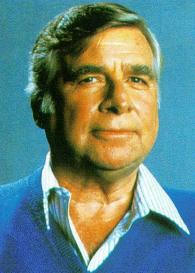
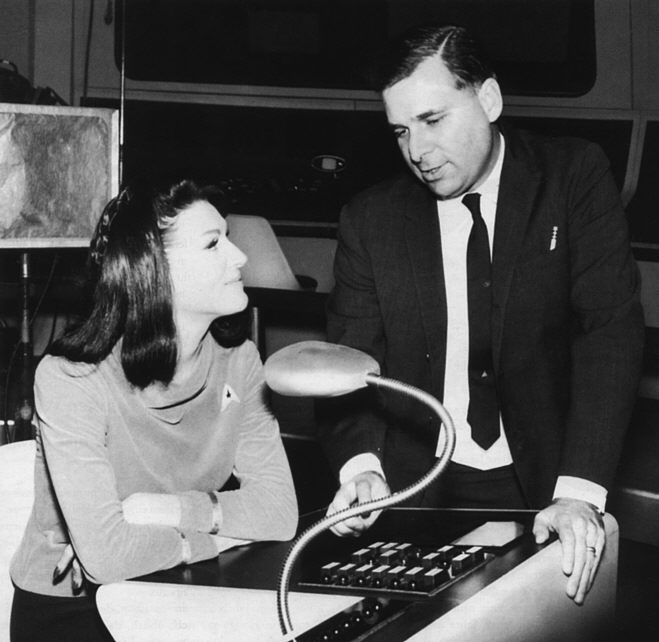
Roddenberry, who gave the world the most famous split infinitive in history ("To bravely go where no man has gone before ..."), is one of the most creative Sci-Fi minds ever to work in Hollywood. His Star Trek set the bar for all future series. Begun as a low-budget weekly television show in the early Sixties, Star Trek was resurrected in feature films, as well as in Star Trek: The Next Generation, which began airing more than a quarter century after the debut of the original. While writing and producing Star Trek, Roddenberry's reputation as a futurist exploded. He lectured about the life that lay ahead at NASA meetings, the Smithsonian Institution, the Library of Congress, and at colleges and universities around the world.
The Texas-born Roddenberry grew up in Los Angeles, where he studied law and aeronautical engineering while obtaining his private pilot's license. After college, with World War II looming on the doorstep, he volunteered for service in the U.S. Army Air Corps in the fall of 1941 and was ordered into training at Kelly Field, Texas. He emerged a Second Lieutenant and was sent to the South Pacific, where he flew B-17 bomber missions from the recently captured Japanese airstrip at Guadalcanal. Before leaving the service, he had flown 89 missions and sorties and received the Distinguished Flying Cross and the Air Medal.
By now a well established writer, Roddenberry turned in his badge and began freelancing. In time, he was named head writer for the highly popular series, Have Gun, Will Travel. His episode, "Helen of Abiginian," won the Writers Guild Award and was distributed to other writers as a model script for the series. Following that, he created and produced The Lieutenant TV series, the story of a young man learning the lessons of life while in the United States Marine Corps.
Roddenberry served as a member of the Writers Guild Executive Council and as a Governor of the Academy of Television Arts and Sciences. He held three honorary doctorate degrees: Doctor of Humane Letters from Emerson College in Boston, Mass.; Doctor of Literature from Union College in Los Angeles (1977); and Doctor of Science from Clarkson College in Potsdam, New York (1981). In 1979, Roddenberry added the word, "novelist," to his repertoire after novelizing Star Trek: The Motion Picture (Pocket Books). The book sold nearly a million copies and ranked number-one on national best-seller lists for several weeks. Gene Roddenberry died on October 24, 1991.
Discover Gene Roddenberry
Indulge
Yourself - Check Out Today's Best-Selling |



- HOME -